

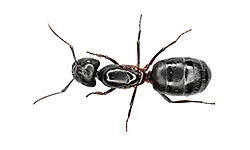
Carpenter ants don't eat wood like termites, but they tunnel through it — especially wood that's damp or already softened — to build their nests, which can cause structural damage if a colony goes untreated.
They're most active at night and often forage well away from the nest, making the true nest location easy to miss without a trained inspection.
Signs You May Have Carpenter Ants
- Large black ants (1/4 to 1/2 inch) foraging indoors, especially at night
- Piles of coarse, sawdust-like shavings near baseboards or window sills
- Faint rustling sounds inside walls
- Winged ants emerging indoors, especially in spring
Our Treatment Approach
We trace foraging trails back to nesting sites — indoors and out — and apply targeted treatment to eliminate the colony at its source, along with a perimeter barrier to stop new ants from moving in.

call us any time